
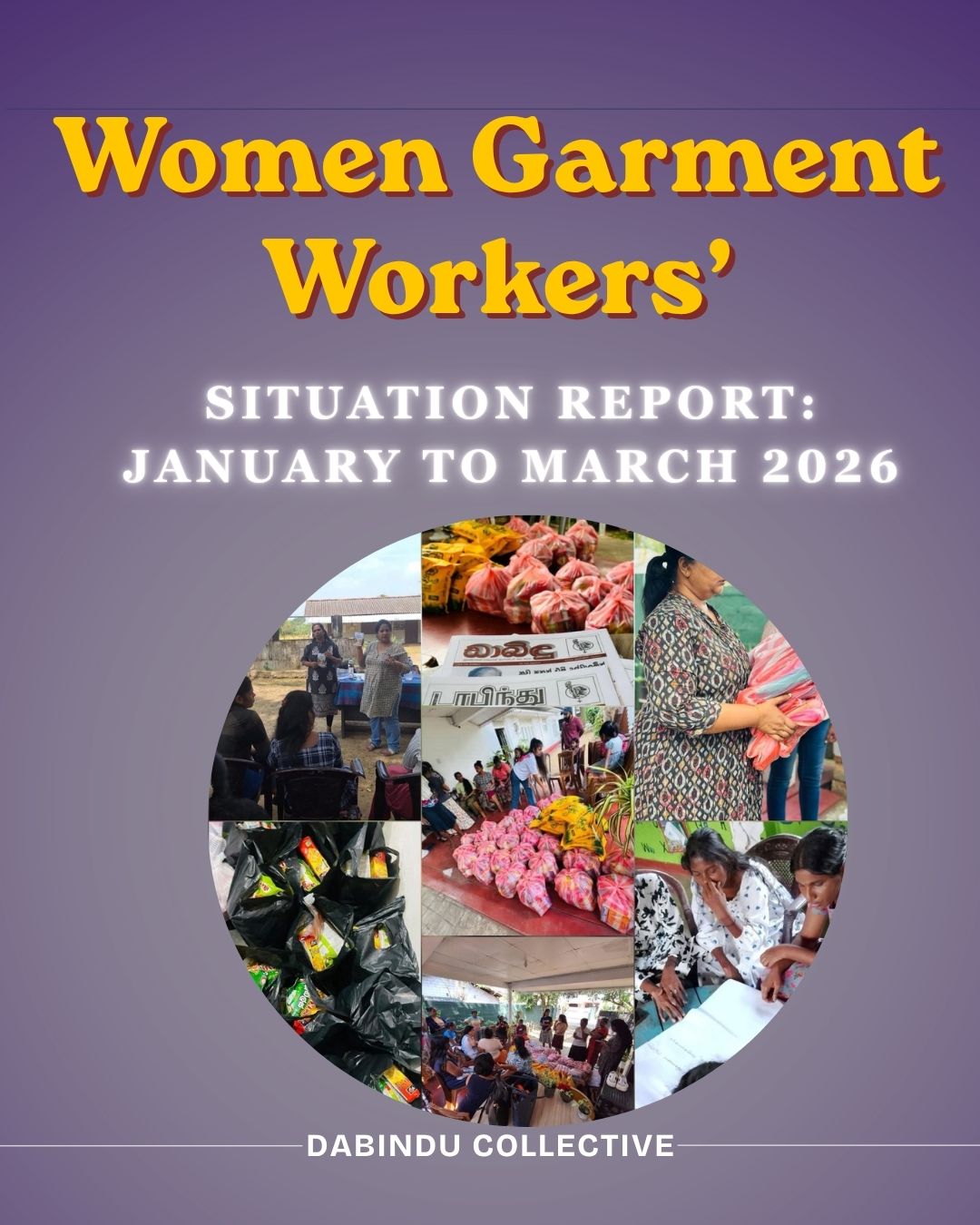

Situation Report (Jan – Mar 2026)
During the first quarter of 2026, women garment workers across Katunayake, Biyagama, Kilinochchi, and Vavuniya continued to face worsening labour conditions despite signs of economic recovery. Rising living costs, fuel restrictions, and unstable incomes have intensified daily hardships, with workers bearing the dual burden of paid labour and unpaid care work. Although a minimum wage increase was announced, its implementation remains inconsistent, with many workers reporting unpaid overtime, reduced working days, and unrealistic production targets. The expansion of contract-based employment has further deepened job insecurity and limited access to basic protections.
Workplace conditions remain concerning, with reports of unsafe food, poor sanitation, limited access to clean water, and exposure to dust, chemicals, and excessive heat—contributing to growing health risks, including widespread heat stress. Climate-related impacts have further aggravated vulnerabilities, as seen when cyclone relief provided to workers was later deducted from their wages, shifting the burden of recovery onto those already affected. At the same time, access to basic rights continues to be restricted, with workers penalized for taking sick leave, pregnant workers engaged in physically demanding labour without adequate support, and even essential items such as menstrual hygiene products being deducted from wages.
Gender-based violence and harassment persist across workplaces, particularly affecting contract workers who face verbal abuse, intimidation, and unsafe reporting mechanisms. These experiences highlight a broader systemic issue where legal protections exist but are not meaningfully enforced. Overall, the period reflects a widening gap between policy commitments and the lived realities of women workers, underscoring the urgent need for stronger enforcement, inclusive labour protections, and a worker-centred approach to ensure dignity, safety, and justice in the garment sector.
Garment Workers’ Situation Report January 2026 – March 2026 (1)